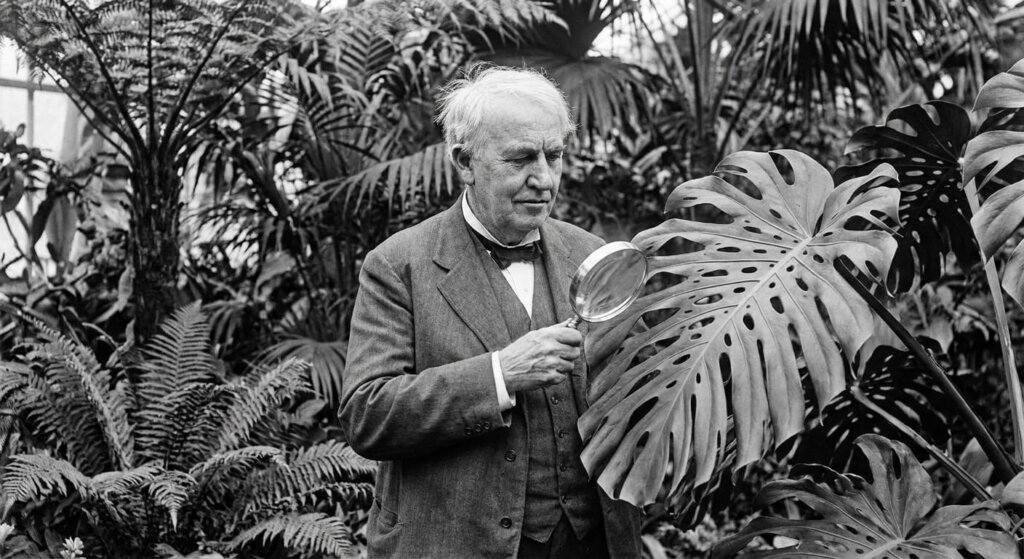
Thomas Edison changed the world. He gave us the incandescent light bulb. He brought us the phonograph. He pioneered motion pictures. He was the undisputed wizard of human innovation. We picture him in a laboratory, surrounded by wires and glass. We imagine a man who conquered the natural world. However, that image is incredibly incomplete.
Deep down, Edison was profoundly humbled by nature. He knew the limits of his own genius. He understood the boundaries of human science. This humility is perfectly captured in one of his most profound, yet lesser-known observations. He once said,
Until man duplicates a blade of grass, nature can laugh at his so-called scientific knowledge. Remedies from chemicals will never stand in favor compared with the products of nature, the living cell of the plant, the final result of the rays of the sun, the mother of all life [1].
Thomas Alva Edison
This is a stunning admission. It comes from a man holding over a thousand patents. Yet, it rings with undeniable truth. Even today, with all our modern technology, Edison’s words hold immense weight. They challenge our arrogance. They urge us to rethink our approach to medicine, science, and the world around us.
This article, the first in a two-part series, explores Edison’s deep connection to the natural world. It examines the humbling complexity of a simple blade of grass. It reveals how modern science is finally learning to copy nature, rather than conquer it.
The Inventor and the Green World
To understand Edison’s quote, we must first look at his actual relationship with the earth. He was not just a mechanic. He was a relentless, obsessive botanist.
Childhood Curiosities and Lifelong Questions
Edison’s fascination with the natural world began in his youth. Biographies recount stories of a young boy who was endlessly curious. He did not just accept how things were. He asked relentless questions about his environment. He conducted his own hands-on experiments. Sometimes, these ended in comical or near-disastrous results [2].
This early inquisitiveness laid a strong foundation. Later in life, his personal diaries revealed a man deeply observant of nature. His mechanical musings were often intertwined with botanical notes. He respected the inherent genius of nature’s designs. He saw mechanics not as a replacement for nature, but as a clumsy imitation of it.
The Vagabonds and the Great Rubber Crisis
Let us travel back to the 1920s. The world was changing rapidly. The automobile industry was booming. America was rolling forward on rubber tires. However, there was a massive problem. The United States relied entirely on foreign sources for rubber. A massive supply crisis loomed on the horizon. National security was at risk.
Edison’s good friends were Henry Ford and Harvey Firestone. Together with naturalist John Burroughs, they called themselves the “Vagabonds.” They often went on long, highly publicized camping trips across America. They drove deep into the woods. They sat around roaring campfires. They discussed the future of industry [3].
Around one of these campfires, they discussed the rubber shortage. They decided to solve the problem. They did not look to build a chemical factory. They looked to the soil.
The Fort Myers Laboratory
They formed the Edison Botanic Research Company. They built a sprawling laboratory in Fort Myers, Florida. Edison was eighty years old at the time. Yet, he tackled this botanical puzzle with the relentless energy of a young man.
Edison did not turn to synthetic chemicals. He turned to nature. He believed the earth already held the answer. He just needed to find it. He believed the living cell of the plant was the ultimate factory.
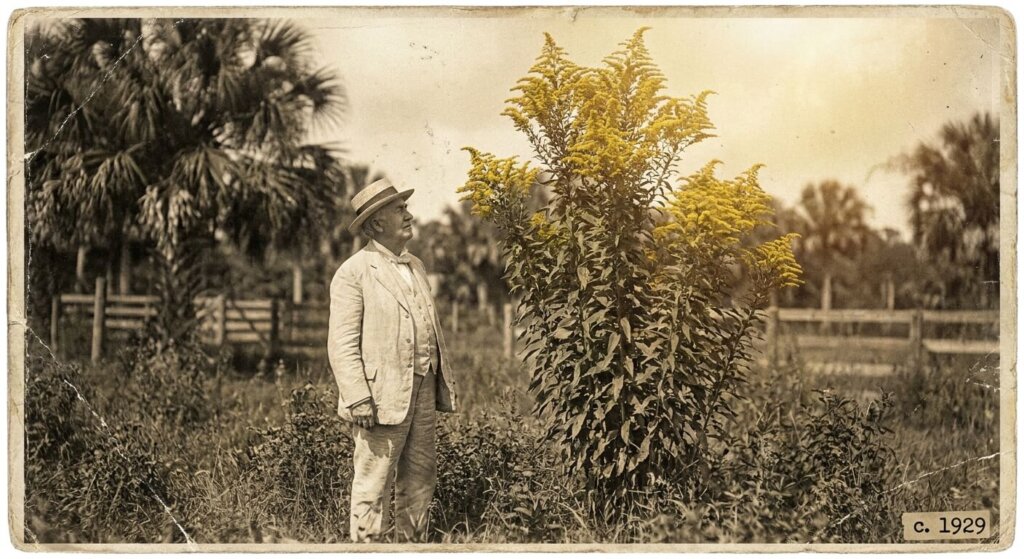
His team tested over 17,000 different plant species. They rigorously analyzed their sap. They measured their latex content. They tested milkweeds. They tested dandelions. They tested exotic vines. Finally, Edison found a winner. It was not a rare jungle plant. It was a common roadside weed. It was the goldenrod [3].
The Giant Goldenrod
Through careful, painstaking crossbreeding, Edison developed a massive strain of goldenrod. He guided its evolution. It grew twelve feet tall. It yielded about twelve percent latex. He successfully found a domestic source of rubber.
He did this not by outsmarting nature, but by collaborating with it. This experience left a deep mark on him. It reinforced his belief that human laboratories could never match the elegance of the natural world.
Humanity’s Humbling Benchmark
We live in an age of immense technological pride. We split the atom. We walked on the moon. We mapped the human genome. It is incredibly easy to feel invincible.
The Hubris of the Lab Coat
Modern science often operates with a dangerous sense of superiority. We love our sterile laboratories. We love our stainless-steel beakers. We synthesize. We isolate. We patent. We believe we have bypassed the messy, wild world of nature. We think we are the masters of the universe.
But have we truly mastered anything? Edison’s quote strikes directly at this scientific hubris. He reminds us of our fundamental limitations. We can build towering skyscrapers. We can launch satellites into deep space. Yet, despite all our supposed mastery, we fall short at the smallest, most fundamental hurdles of biology.
Why We Cannot Build a Blade of Grass
Think about a simple blade of grass. You step on it every single day. You likely ignore it. You mow it down without a second thought. Nevertheless, it is a miracle of engineering.
A blade of grass is a living, self-assembling solar panel. It pulls carbon dioxide out of thin air. It drinks water from the soil. It captures photons traveling millions of miles from the sun. It silently converts these elements into physical matter. It feeds the world. It produces the oxygen we breathe. It regulates the soil temperature. It prevents erosion. And when it dies, it gracefully decomposes into fertilizer to feed the next generation. It does all of this simultaneously. It does it without producing a single ounce of toxic waste.
Now, look at human engineering. Consider our artificial solar panels. They require mining rare earth metals from deep within the earth. They need massive amounts of heat and toxic chemicals to manufacture. They leave behind dangerous chemical waste. After twenty years, they degrade. They end up in landfills. They do not reproduce. They do not repair themselves. They cannot communicate with the solar panel next to them.
No laboratory on Earth has built anything close to a blade of grass.
In 2022, researchers at Cambridge University made headlines. They created a “semi-artificial” photosynthesis system [4]. It was roughly twice as efficient as natural plants at converting sunlight to energy. The scientific community celebrated. It was a genuine breakthrough.
But the operative word remains semi-artificial. They could not build it from scratch. They had to use the plant’s own biological machinery as scaffolding. They hijacked the living cell of the plant. If they were asked to build a blade of grass entirely from base chemicals, they would fail completely. We are nowhere near it.
Nature’s Laughing in Plain Sight: The Marvels of Biomimicry
Edison’s assertion that nature can “laugh” at us is a powerful, humbling metaphor. It highlights the reality that we are just catching up. We are finally learning from innovations that were perfected over billions of years of trial and error.
This realization has birthed a massive new field of science. It is called biomimicry. Biomimicry is the practice of imitating nature’s designs to solve complex human problems. We have finally stopped trying to invent better shapes. We are admitting that nature already designed the best ones.
The Burdock Burr and the Invention of Velcro
One of the most famous and accessible examples of biomimicry is the invention of Velcro. The story begins in 1941. A Swiss engineer named George de Mestral went on a hunting trip in the Alps. He took his dog with him [5].
Upon returning home, he noticed a frustrating nuisance. His thick woolen clothes and his dog’s fur were completely covered in burrs from the burdock plant. Most people would simply pick them off, curse, and throw them away. But de Mestral was an engineer. His curiosity was deeply piqued.
He placed a single burr under a microscope. He was fascinated by what he saw. The burr was not sticky. It was covered in hundreds of tiny, resilient, flexible hooks. These hooks would catch onto anything that had a loop. This simple yet brilliant mechanism of attachment sparked a revolutionary idea.
He spent the next ten years working to replicate this natural fastening system. He experimented with various fabrics. Cotton tore. Rayon failed. Finally, he settled on nylon. When heated and cooled, nylon formed strong, durable hooks and loops. He named his invention Velcro, combining the French words “velour” (velvet) and “crochet” (hook) [5].
Today, Velcro is a ubiquitous part of our lives. It is used in children’s shoes. It is used in blood pressure cuffs. It was even used in astronaut suits during the Apollo moon missions. It is a perfect embodiment of Edison’s sentiment. Nature had the perfect solution long before a human engineer stumbled upon it in the woods.
The Lotus Leaf and Nature’s Nanotechnology
The lotus flower is a powerful symbol of purity in many Eastern cultures. It grows in muddy, stagnant, dirty waters. Yet, its leaves always emerge immaculately clean. They never hold dirt. They never hold water. This phenomenon is known as the “lotus effect.”
German botanist Wilhelm Barthlott solved this mystery in the 1970s [6]. He studied the microscopic structure of the lotus leaf using electron microscopes. To the naked eye, the leaf looks perfectly smooth and sleek. But under a microscope, it is incredibly rough.
The surface is covered in a dense layer of microscopic bumps. It is also coated in waxy crystals. This intricate nanostructure creates a super hydrophobic surface. Water simply cannot flatten out. It beads up into perfect, tight spheres. As these water droplets roll off the leaf, they pick up dirt, fungi, and dust particles. They clean the plant effortlessly.
Humanity took notes. This natural self-cleaning mechanism has inspired a new generation of man-made materials. Scientists and engineers have developed self-cleaning paints. We now have dirt-repellent glass for skyscrapers. We have stain-proof fabrics. All of these stay clean without the need for harsh, toxic chemical detergents. We simply copied the lotus.
More Whispers from the Plant Kingdom
The examples of plant-inspired biomimicry are staggering. They touch almost every industry.
Sunflower Solar Power: Sunflowers track the sun throughout the day. They turn their heavy heads to follow the light. This heliotropic movement has inspired the design of highly efficient, pivoting solar panels. These panels track the sun’s movement, capturing vastly more energy than static panels.
The Namib Desert Beetle: This tiny insect lives in one of the driest places on Earth. Yet, it never goes thirsty. Its shell has a unique microscopic surface with hydrophobic and hydrophilic bumps. It catches morning fog and turns it into heavy water droplets that roll directly into its mouth. We now use this exact design to create materials that harvest drinking water from the air in arid regions.
Architecture that Breathes: Termite mounds perfectly regulate their internal temperature, even in the blistering African sun. They use a complex network of vents. Modern architects now mimic these structures. The Eastgate Centre in Zimbabwe is a famous example. It is a building that cools itself without massive air conditioning units, using a fraction of the energy of a normal building.
The Mother of All Life: Sunlight Captured
Let us examine the poetic conclusion of Edison’s quote. He calls the plant the “final result of the rays of the sun.” He names the sun “the mother of all life.”
Eating the Sun
This is not just romantic poetry. It is pure biological fact. It is the law of thermodynamics. Every single ounce of energy in your body originated from a star.
Think about your very last meal. Perhaps you ate an apple. The apple tree built that fruit using solar energy. You are literally eating processed sunlight. Even if you ate a steak, the cow grew by eating grass. And the grass grew by eating the sun.
Sunlight is the ultimate currency of life on Earth. Our planet is a closed system. We do not generate new energy out of thin air. We receive it continuously from our sun. Plants are the vital, necessary translators. They speak the language of light. They catch the sun’s fiery rays and turn them into solid, life-giving matter [7]. Without the blade of grass, the sunlight would simply hit the dirt and reflect back into space. The earth would be a dead rock.
The Quantum Engine in a Leaf
The process of photosynthesis is staggeringly complex. It borders on literal magic.
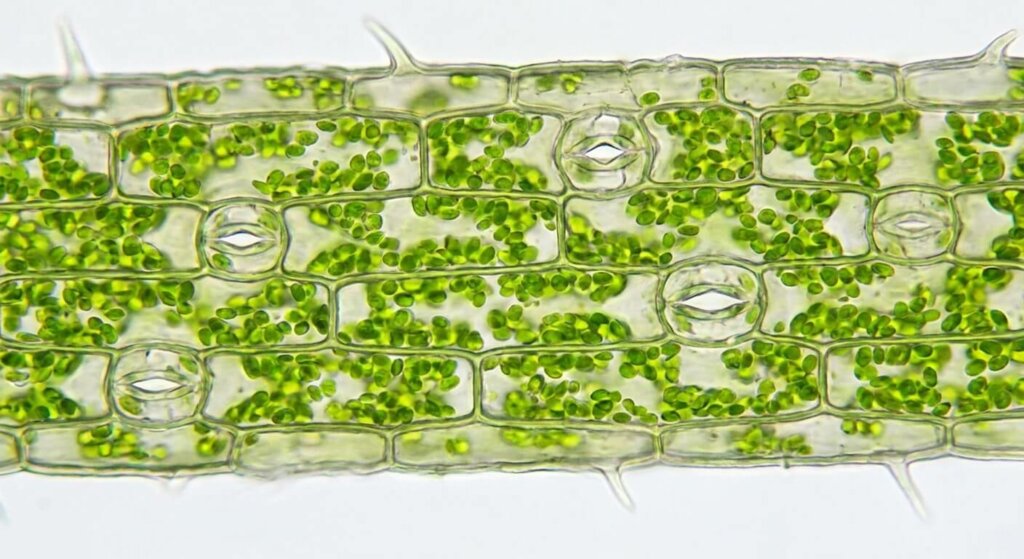
Inside the leaf, there are tiny structures called chloroplasts. They contain a green pigment called chlorophyll. When a single photon of sunlight strikes the leaf, the plant captures it. The plant uses that light energy to tear apart water molecules. It violently rips the oxygen away from the hydrogen.
Recent scientific studies even suggest that plants use quantum mechanics. They use something called “quantum coherence” to transfer energy with near-perfect efficiency. They test multiple pathways simultaneously to find the fastest route for the energy to travel. No human-made solar cell even comes close to this level of quantum efficiency [8].
Solar Medicine
Edison understood that the sun was the original medicine. It was not just a light bulb in the sky. Modern science is aggressively rediscovering this ancient truth.
Ancient cultures used sunlight therapeutically. The Egyptians called it heliotherapy. They built special solariums to heal the sick. Hippocrates, the father of modern medicine, routinely recommended sunbathing to cure diseases like tuberculosis. Indigenous cultures built their entire daily rhythms around the sun’s cycles.
Today, modern humans have moved indoors. We live in boxes. We travel in metal boxes. We stare at glowing boxes. The health consequences have been utterly severe.
Ultraviolet B rays from the sun are the primary, necessary trigger for Vitamin D synthesis in our skin [9]. Vitamin D acts more like a hormone than a vitamin. It affects almost every cell in the body. Today, Vitamin D deficiency is a massive global epidemic. It is now linked to a stunning range of severe conditions. Osteoporosis. Severe clinical depression. Immune system dysfunction. Cardiovascular disease. Certain types of cancers.
Edison, with his deep botanical instinct, knew the truth. We are creatures of the sun. The living cell of the plant thrives on it, and so do we. We cannot outsmart our own biology. We cannot replace the sun with a fluorescent tube.
In the next article, we will explore the second half of Edison’s quote. We will dive into the great medical debate. We will see exactly why Edison believed that synthetic, chemical remedies would never stand in favor against the ancient, perfected pharmacy of nature.
References
[1] Quote Investigator. “Until man duplicates a blade of grass…” Documented from John F. O’Hagan’s notebooks of Thomas Edison’s quotations.
[2] Bryan, G. S. (1926). Edison: The Man and His Work. Alfred A. Knopf.
[3] National Park Service. (n.d.). Thomas Edison and the Goldenrod. Historical Archives.
[4] Rosas-Morales, G., et al. (2022). “Semi-artificial photosynthesis pathways for solar-to-chemical conversion.” Nature Chemistry, 14, 607–615.
[5] Velcro Companies. (n.d.). Who Invented VELCRO® Brand Fasteners? The Story of George de Mestral.
[6] Biolearn. (n.d.). Lotus Effect – Self-Cleaning Surfaces.
[7] Smil, V. (2017). Energy and Civilization: A History. MIT Press.
[8] Blankenship, R. E., et al. (2011). “Comparing Photosynthetic and Photovoltaic Efficiencies and Recognizing the Potential for Improvement.” Science, 332(6031), 805–809.
[9] Holick, M. F. (2007). “Vitamin D Deficiency.” New England Journal of Medicine, 357(3), 266–281.
Next Post: Until man duplicates a blade of grass- Part 2
